PocketGuard review: a useful limit without a second job
By Eli Mercer · Data check by Mara Voss · Updated August 5, 2026
PocketGuard is our runner-up budgeting app for 2026, scoring 4.5/5 after 48 days. Its “In My Pocket” calculation turns income, bills, goals, and spending into an unusually clear daily limit with little setup. YNAB remains better for active planning, but PocketGuard is the stronger choice for quick, low-maintenance guidance.
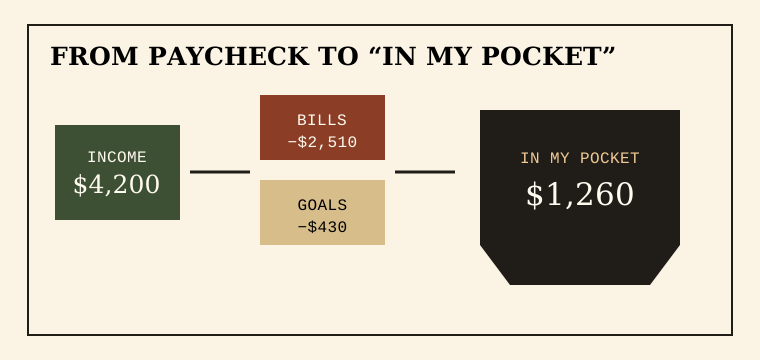
PocketGuard compresses several moving parts into one daily decision number.
What worked
Useful safe-to-spend calculation
Fast setup and gentle maintenance
Strong recurring bill detection
Functional free starting tier
What did not
Less flexible future planning
Best controls require Plus
Collaboration is limited
Reports trail broader dashboards
PocketGuard starts from a practical question: after the obligations and goals, what can I spend? Its “In My Pocket” figure subtracts upcoming bills, budgeted spending, and goal contributions from expected income. That number is not magic and it depends on complete account data, but it is a better home-screen decision aid than a generic monthly spending total.
How we tested PocketGuard
We used the official PocketGuard service daily from May 28 through July 14, 2026. Our test linked checking, savings, and two credit cards, covered 544 transactions, and included two pay cycles, nine recurring bills, a savings goal, and one intentionally irregular vehicle expense. Weekly bank exports checked dates, amounts, duplicates, transfers, and ending balances.
On the first reconciliation pass, 536 of 544 transactions aligned without intervention, a 98.5% match rate. Three pending purchases changed dates, two transfers needed recategorization, and three merchant categories required correction. All balances reconciled after those edits. Refresh timing was generally same-day, with one credit-card connection requiring a manual reconnect during the 48-day period.
PocketGuard weighted scorecard · August 2026
Category
Weight
Score
Weighted points
Budgeting & planning
30%
4.2
1.26
Transaction accuracy
25%
4.6
1.15
Usability
20%
4.8
0.96
Connectivity
15%
4.6
0.69
Value
10%
4.4
0.44
Total
100%
4.50 → 4.5/5
The home screen earns its place
PocketGuard’s best idea is compression. The app finds recurring income and bills, lets you adjust what counts, accounts for category budgets and goals, then presents an available amount. We checked the calculation manually after each payday. It remained arithmetically sound once recurring items were corrected during setup, and the daily version usefully discouraged spending money already spoken for.
The weakness is that a simple number can look more certain than it is. A missing annual premium or stale bank balance makes “In My Pocket” too generous. We recommend creating every known irregular cost before trusting the figure. PocketGuard helps find subscriptions and repeat bills, but no algorithm can infer a cash expense or a premium that has not appeared in the connected history. Our 30-day subscription audit diary shows what happened after detection.
Budgets are capable but not deep
Category budgets, rollover behavior, custom rules, hashtags, and goals cover ordinary planning. Editing a mistaken category was quick, and learned merchant rules reduced cleanup by week three. The interface makes overspending visible without demanding an immediate category transfer. That is calmer than YNAB, but it also means PocketGuard does less to force a concrete tradeoff.
Planning several months ahead, building finely separated sinking funds, and auditing credit-card payment categories are not PocketGuard’s strengths. It is an expense organizer with forward-looking guardrails, not a full zero-based allocation system. The distinction matters more than the feature checklist; our plain-English glossary explains tracking, reconciliation, and zero-based budgeting.
Price and the free tier
PocketGuard offers a free starting tier. As checked on August 5, 2026, PocketGuard Plus is $12.99 per month or $74.99 per year, equal to about $6.25 monthly when billed annually, before applicable tax. The paid plan expands customization and planning controls. Pricing and trial offers can change, so verify the checkout screen.
The annual price is $34.01 below YNAB’s $109 plan. Whether that is better value depends on the job. PocketGuard costs less and asks less of the user; YNAB provides more planning control. The free tier is useful for testing whether your bank connects and whether the core spending figure fits your decisions before purchasing anything.
Who should use PocketGuard?
Choose PocketGuard if you want automatic transaction organization, recurring-bill awareness, and a practical spending ceiling without holding a weekly budget meeting with yourself. It particularly suits steady income and predictable bills. People with variable income can use it, but should inspect forecasts carefully and set conservative goal contributions.
Choose another app if you want detailed shared planning, investment reporting, or a manual envelope system. YNAB is better for hands-on allocation; Monarch Money gives households a broader financial dashboard; Goodbudget supports manual envelopes without bank-sync dependence. The full CoinBadger ranking compares all seven.
CoinBadger verdict 4.5 / 5
PocketGuard turns messy account activity into the clearest daily spending guardrail we tested. Its lighter planning ceiling keeps it behind YNAB, but its speed, accuracy, and lower annual price make second place a strong recommendation rather than a consolation prize.
PocketGuard FAQ
Is PocketGuard free in 2026?
PocketGuard offers a free tier, but several valuable controls sit in PocketGuard Plus. As checked August 5, 2026, Plus costs $12.99 monthly or $74.99 annually, before applicable tax. Start free to test bank compatibility and the spending view; pay only if custom categories, expanded goals, and deeper controls matter.
Is PocketGuard better than YNAB?
PocketGuard is better for fast setup, automatic organization, and a simple answer to how much is safe to spend. YNAB is better for deliberate category planning, irregular expenses, and reconciliation. We score PocketGuard 4.5/5 and YNAB 4.8/5, but the easier product can be the better personal fit.
Is PocketGuard safe to link to a bank?
PocketGuard says it uses encrypted connections and read-only access through data providers, so the app cannot initiate transactions through a linked account. No aggregation system is risk-free. Use a unique password and available multifactor protection, review connected institutions, and begin by linking one account before committing your complete financial picture.
Does PocketGuard work for couples?
PocketGuard can show a household picture when accounts are connected, but its collaboration model is less developed than products built around shared access. Couples who manage one plan together may prefer YNAB Together, Monarch Money, or Honeydue. PocketGuard works best when one person primarily maintains the budget and shares the resulting limits.