By Mara Voss · Published July 27, 2026 · Updated August 5, 2026
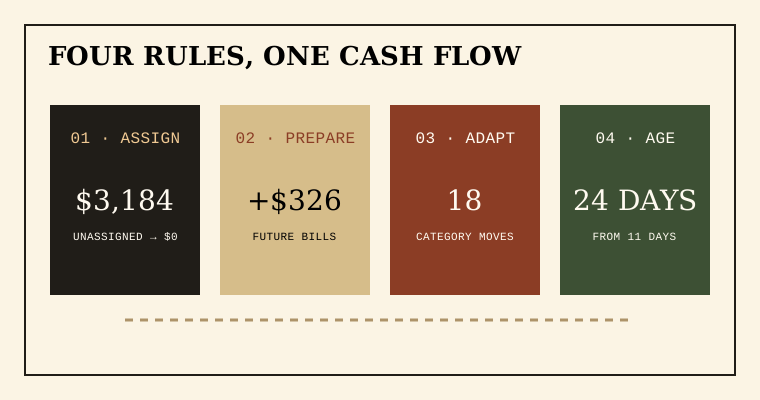
Following all four YNAB rules for June 2026 did not make spending magically fall. It moved $326 toward known future bills, reduced uncovered overspending from $214 to $0, and raised our oldest-money interval from 11 to 24 days. The tradeoff was 96 minutes of setup and about 51 minutes a week thereafter.
This case study used the same two-adult test budget as our 52-day YNAB review, but isolated the company’s four rules during June 1–30, 2026. Net income received was $5,420. We started with $3,184.22 available across checking and savings, 31 categories, two credit cards paid in full, and no carried debt.
The four rules changed where money waited and how overspending was resolved; they did not change the amount earned.
Before and after following all four rules
Measure
May 31
June 30
Change
Oldest-money interval
11 days
24 days
+13 days
Future bills funded
$480
$806
+$326
Uncovered overspending
$214
$0
−$214
Category moves
Not logged
18 moves / $392
Visible tradeoffs
Weekly maintenance
24 min
51 min
+27 min
Rule one: give every dollar a job
On June 1, we assigned all $3,184.22 already available, stopping when the unassigned figure reached zero. Rent, utilities, groceries, transport, and the coming credit-card payment went first. Then we funded annual insurance, gifts, vehicle maintenance, and a buffer. “Zero” described unassigned money, not the bank account; the cash remained available inside categories.
The useful change was priority visibility. Only $118 remained for dining after essentials and true expenses were funded. We had spent $246 on dining in May. The lower number was not an app recommendation; it was what remained after our own higher priorities.
Rule two: embrace your true expenses
We listed eight non-monthly costs with due dates: $720 insurance, $420 vehicle service, $360 gifts, $240 annual software, $180 medical deductible reserve, and three smaller renewals totaling $276. Their full $2,196 burden looked alarming. Converted into monthly contributions based on due dates, June required $326.
That $326 is the clearest measured improvement. Before the exercise, only insurance and gifts had categories. By June 30, every known bill had some funding, and the next 90 days of obligations were covered. Our glossary entry on sinking funds explains why a known irregular bill should not be treated as an emergency.
Rule three: roll with the punches
Reality changed 18 times. Groceries exceeded the initial amount by $73, fuel by $28, and a pharmacy category by $46. We moved money rather than leaving red amounts. The largest sources were dining ($92), home improvement ($41), and a later-month fun category ($37). Across all moves, $392 changed jobs.
This rule prevented the plan from becoming a failed forecast. It also made the cost of flexibility explicit. The $73 grocery increase was reasonable; it still meant $73 could not remain elsewhere. By month-end, uncovered cash overspending was zero and credit-card payment categories matched the working balances.
Rule four: age your money
YNAB’s current language emphasizes getting a month ahead: use money received earlier to fund later spending. We measured the interval between income arrival and the spending it supported. It rose from 11 days at the start to 24 days on June 30. We did not manufacture that result by delaying a card payment; all cards were paid on schedule.
The increase came from leaving $326 in future-expense categories and ending June with $487 assigned into July essentials. The number was helpful as direction, not a score. A person with irregular income or debt may need a different sequence. Our freelancer buffer case uses a minimum-income baseline instead of forcing every month to look alike.
What the rules did not do
Total June spending was $4,931, only $38 below May after removing a one-time expense. Grocery spending rose. The method did not locate cheaper insurance, negotiate a bill, or create income. It improved allocation: more cash waited for known obligations, and every overspent category showed its source.
Time cost was real. Initial cleanup and target creation took 96 minutes. Weekly reviews averaged 51 minutes, up from 24 minutes when we used YNAB mainly as a tracker. Daily approvals averaged three minutes. The month was worthwhile because the household wanted detail; someone seeking a fast spending limit would reasonably choose the simpler workflow in our YNAB versus PocketGuard comparison.
Case-study verdict
All four rules worked together. Rule one exposed limits, rule two gave future bills a place, rule three kept the plan honest, and rule four measured the growing interval. Removing one weakened the others: aging money without true expenses overstated security, while assigning dollars without rolling with changes produced brittle categories.
Our result is one cash-flow pattern, not a promised saving. The strongest outcome was not the 13-day increase; it was the $326 that would otherwise have looked available. On July 27, 2026, those categories were still funded and no June overspending remained hidden.
YNAB’s Four Rules FAQ
What are YNAB’s four rules?
The four rules are to give every dollar a job, embrace true expenses, roll with the punches, and age your money. Together they assign current cash, prepare for irregular costs, allow explicit changes, and increase the time between receiving and spending money.
Did following the YNAB rules reduce spending?
Barely in this case. June spending was $38 below comparable May spending. The meaningful change was allocation: $326 more went to future bills, uncovered overspending fell from $214 to zero, and $487 was assigned toward July essentials.
How much time did all four rules take?
Initial cleanup and target setup took 96 minutes. Weekly reviews averaged 51 minutes during June 2026, plus roughly three minutes per day for transaction approval. That was 27 weekly minutes more than using the app mainly as a tracker.